Source Quilted Anti Bacteria Custom Pillow for Hotels
Find 30 quilted anti bacteria custom pillow options from China. Compare features like feather cotton and memory foam fillings, sizes, and customization capabilities for hotel and home bedding needs; compare the available evidence and request quotations based on your requirements.
Key considerations
Products List


Comprehensive Sourcing Guide
Quilted Anti Bacteria Custom Pillow Sourcing Guide
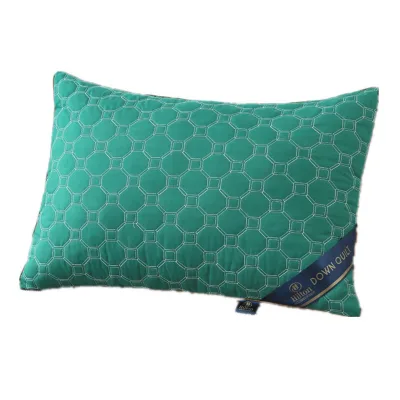
Buyers evaluating this category must first distinguish between the specific product attributes observed in current listings and general market expectations. The available data indicates a strong presence of 100% polyester covers paired with feather cotton or memory foam fillings, often marketed with specific features like anti-dust mite and waterproof capabilities. Procurement teams should verify if the "quilted" design is a standard construction method or a specific customization option, as some listings explicitly note handmade techniques while others suggest woven or jacquard styles.
The commercial landscape for these items shows a wide variance in minimum order quantities, ranging from 20 to 1000 pieces, which significantly impacts initial capital requirements. Sourcing strategies must account for the fact that customization is widely accepted, allowing for tailored logos and specific color palettes including grey, white, pink, and blue. Buyers should prioritize suppliers who can clearly articulate the difference between standard stock items and fully customized units to avoid unexpected delays or cost overruns during the initial negotiation phase.
Product Scope and Observed Listing Signals
The product scope encompasses a diverse range of pillow types, including body pillows and standard sleeping cushions, with dimensions frequently observed around 74 by 48 centimeters. Listings reveal that these items are designed for multiple usage scenarios, including home, hotel, and hospital environments, suggesting a need for durability and hygiene. The presence of features like "anti-pilling" and "non-toxic" materials indicates a market focus on long-term usability and safety, which should be a primary filter when reviewing supplier catalogs.
Observations also highlight specific packaging variations, such as vacuum packing or individual OPP bags, which influence logistics planning and storage requirements. Some products are listed with specific weights, such as 750g, 850g, or 1000g, directly correlating to the filling density and intended comfort level. Buyers must carefully cross-reference these weight specifications with the stated filling materials, as discrepancies between feather cotton and microfiber fillings can drastically alter the final product feel and performance.
Technical Specifications to Verify
Technical verification begins with confirming the exact composition of the cover material, as listings show a mix of 100% polyester and 100% cotton options that serve different functional needs. The filling material is equally critical, with data pointing to feather cotton, microfiber, and memory foam as the primary options, each offering distinct support and breathability characteristics. Procurement teams should request physical samples to validate the claimed "waterproof" and "air-permeable" attributes, ensuring the fabric construction meets the specific environmental demands of the intended application.
Dimensional accuracy and shape consistency are other vital technical parameters, with rectangular shapes being the dominant form factor in the observed data. Buyers must verify if the listed sizes, such as 74*48 cm, are consistent across all weight variants or if they vary based on the filling density. Additionally, the production technique, whether described as handmade, woven, or jacquard, should be confirmed as it directly impacts the aesthetic finish and the structural integrity of the quilted pattern over time.
Compliance and Safety Documentation
While specific certification statuses like OEKO-TEX are mentioned in background contexts, buyers must treat these as verification targets rather than guaranteed attributes for every listed product. The "non-toxic" and "anti-bacteria" claims found in product descriptions require independent laboratory testing to substantiate, especially for items intended for hospital or hotel use where hygiene standards are stringent. Sourcing teams should explicitly request current test reports that validate the anti-dust mite and anti-bacterial performance claims before finalizing any purchase agreement.
Safety documentation should also address the flammability and chemical safety of the filling materials, particularly when memory foam or feather cotton is used. Buyers need to ensure that the supplier can provide evidence that the production process adheres to relevant safety standards for textile products in the target market. Without concrete documentation, claims regarding eco-friendliness or non-toxicity remain unverified assertions that could pose regulatory risks during product importation or retail distribution.
Cost Drivers and Commercial Terms
The cost structure for these pillows is heavily influenced by the choice of filling material and the level of customization required, with prices observed ranging from 0.45 to 17 USD per unit. Higher costs are typically associated with memory foam fillings, complex quilted patterns, or the inclusion of custom logos and specific packaging solutions. Buyers should analyze the price-to-weight ratio to understand if the cost difference between a 750g and a 1000g pillow justifies the additional material expense for their specific market segment.
Commercial terms must clearly define the minimum order quantity, which varies significantly from 20 to 1000 pieces depending on the supplier and product configuration. Lead times and shipping costs are further complicated by the single package size and gross weight, which can affect container loading efficiency and overall freight expenses. Negotiating flexible MOQs and clear payment terms is essential, as the high degree of customization often requires longer production cycles and stricter quality control measures.
Supplier Qualification and Quality Control
Supplier qualification should focus on verifying the place of origin, with Anhui and Hangzhou identified as key manufacturing hubs for these products. Buyers must assess the supplier's capacity to handle custom orders, as the data indicates that customization is a standard offering but requires precise communication regarding logos, colors, and packaging. Establishing a clear quality control protocol is necessary to ensure that the "handmade" or "woven" techniques are executed consistently across large production runs.
Quality control checks must include random sampling to verify the consistency of the quilted pattern and the integrity of the seams, which are critical for preventing filling migration. Since the products are designed for repeated use in settings like hotels and hospitals, durability testing for features like "anti-pull" and "anti-dust mite" is essential. Buyers should insist on pre-shipment inspections that validate the physical attributes against the agreed-upon specifications to mitigate the risk of receiving substandard goods.
Long-Term Procurement Checks
Long-term procurement success depends on establishing a reliable supply chain that can maintain consistent quality and delivery schedules over multiple order cycles. Buyers should monitor the supplier's ability to scale production while maintaining the specific technical attributes, such as the exact weight and filling density, that were approved in the initial sample phase. Regular audits of the manufacturing process can help ensure that the "eco-friendly" and "non-toxic" claims remain valid as production volumes increase.
Continuous communication regarding market trends and material availability is also crucial, as the textile industry is subject to fluctuations in raw material costs and supply chain disruptions. Buyers should maintain a relationship with suppliers that allows for agile responses to changing requirements, such as adjusting color palettes or packaging methods. By treating the supplier as a strategic partner rather than a transactional vendor, buyers can better navigate the complexities of custom pillow manufacturing and ensure a steady supply of high-quality products.
FAQs
What materials are used for quilted anti bacteria custom pillows?
These pillows typically use 100% polyester covers and feather cotton filling. Some variants feature microfiber or memory foam fillings for different support levels. The fabric may be woven or Jacquard style, ensuring durability and comfort for hotel or home use while maintaining anti-bacterial properties.
Can I customize the logo and packaging for these pillows?
Yes, customization is available for logos and packaging. Buyers can request custom logos on the pillow surface. Packaging options include OPP bags, vacuum packing, or customized cartons. This flexibility supports branding needs for hotels, hospitals, or retail distributors seeking unique product presentations.
What are the standard sizes for these custom pillows?
Standard sizes are 74*48 cm with varying weights like 750g, 850g, or 1000g. Some options include bags for added protection. Custom sizes are also available upon request. These dimensions suit most bed sleeping requirements, providing consistent fit for hotel bedding and home comfort applications.
What features do these pillows offer for hygiene and comfort?
Features include anti-bacterial, anti-dust mite, and waterproof properties. They are also air-permeable and non-toxic. The quilted design enhances comfort and durability. These attributes ensure a hygienic sleeping environment, making them suitable for hospitals, hotels, and health-conscious consumers seeking reliable bedding solutions.
What is the minimum order quantity for these pillows?
The minimum order quantity is typically 100 pieces. Some listings indicate ranges from 20 to 1000 pieces depending on the supplier. This MOQ supports small businesses and large distributors alike. Buyers should confirm specific MOQs with manufacturers to align with their inventory and budget requirements.
Where are these pillows manufactured?
These pillows are manufactured in China, specifically in regions like Anhui and Hangzhou. These areas are known for textile production capabilities. Buyers can source from multiple factories in these locations. The origin ensures access to established supply chains and competitive pricing for bulk orders.